Workflow Automation
Internal Workflow Automation
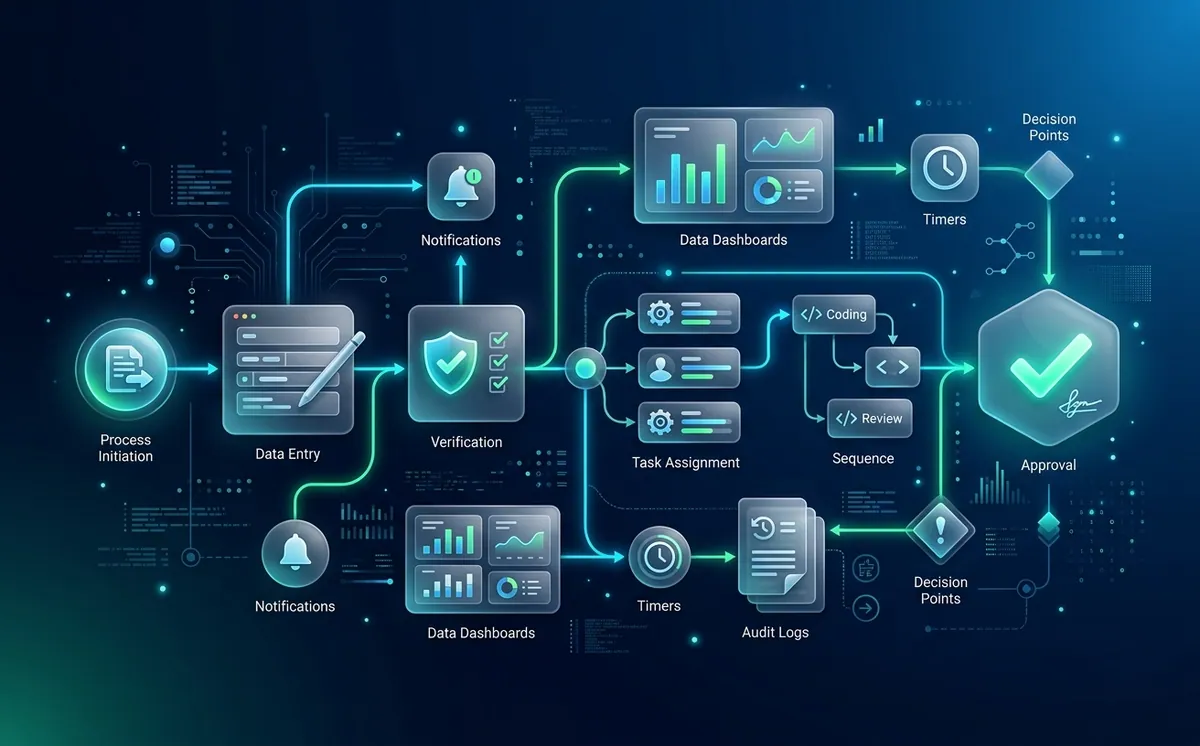
When repetitive internal processes stay manual, time, accountability, and quality become harder to control. Workflow automation turns registration, assignment, approval, notifications, reporting, and archives into a clear and measurable flow.
Service focus
The workflow is real and recurring
Requests, approvals, assignments, reports, or customer actions happen often enough that they need a clearer path.
Generic tools are starting to fail
Manual workarounds, fragmented communication, or weak reporting are already slowing the team down.
You need a stable base for growth
The first version should be useful today and still support later integrations, dashboards, and expansion.
Why this service matters
Internal Workflow Automation becomes valuable when business logic needs a reliable execution path
This service matters when generic tools, fragmented communication, or disconnected systems start slowing down daily operations.
The goal is to turn a real operating need into a maintainable software path with a clear first version, stable structure, and room for future growth.
If the scope is still early, we usually begin by clarifying requirements, priorities, and the safest implementation path before coding.
Deliverables
From analysis to a usable, reviewable outcome
Execution path
Phased, visible, and easier to control
Clarify the problem
We review the current workflow, the business goal, constraints, and the outcome that really matters.
Define the first version
We separate the essential first release from later capabilities and identify the safest delivery scope.
Build and review in steps
Capabilities move forward in controlled stages so quality, feedback, and clarity stay visible.
Support future growth
Documentation, improvements, and future integration paths stay tied to the project structure.
Alternative paths
The right solution depends on the real workflow, not on labels alone
Sometimes an off-the-shelf tool is enough. In other cases, a custom path is the safer long-term choice.
Off-the-shelf tools
Good for generic needs, but usually weaker for custom logic, reporting depth, and future growth.
Content-first websites
Useful for brand presence and simple content, but not a replacement for operational business software.
Separate mobile-first build
Best when the main workflow lives on mobile, but many business cases still need a stable web and admin core first.
Related examples from the portfolio
Reference cases close to this service
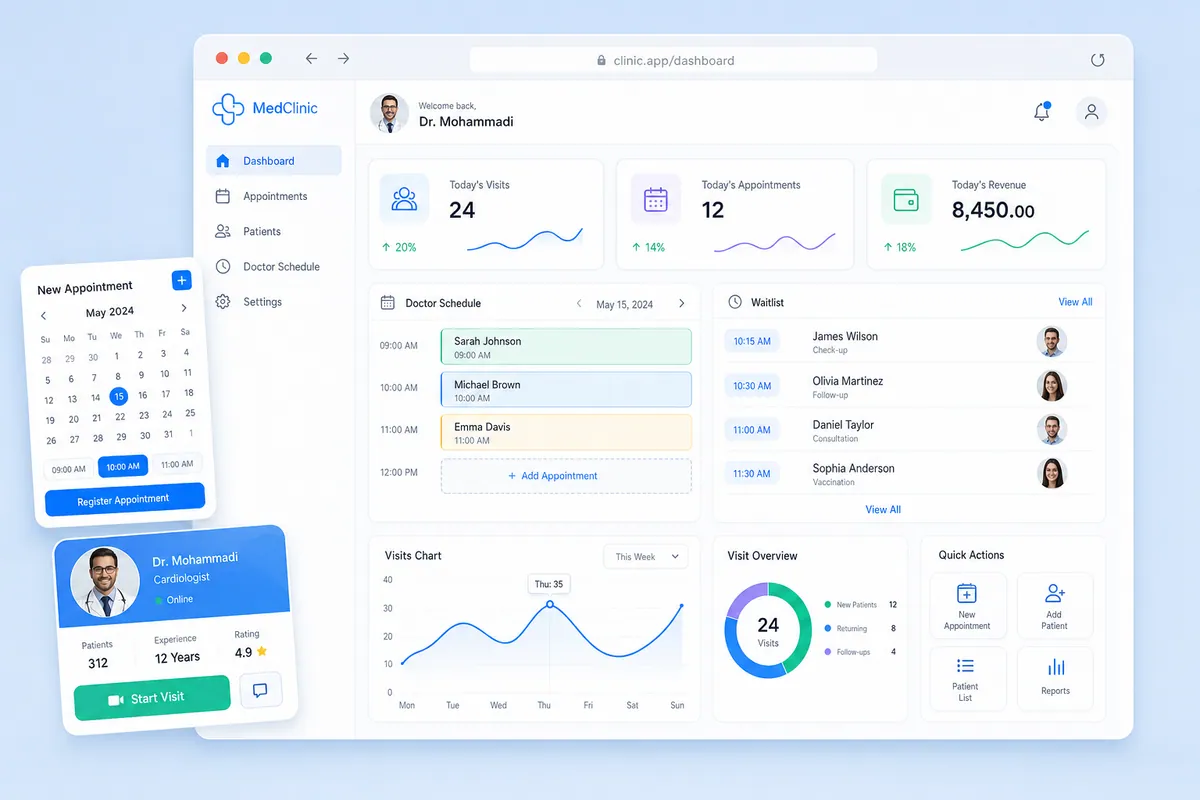
Veridian Clinics
Clinic Management & Appointment Platform
A role-based platform for appointments, medical files, doctor schedules, and payment workflows.
3 roles
Reception, doctor, management
Appointment errors dropped and daily medical capacity became easier to monitor.
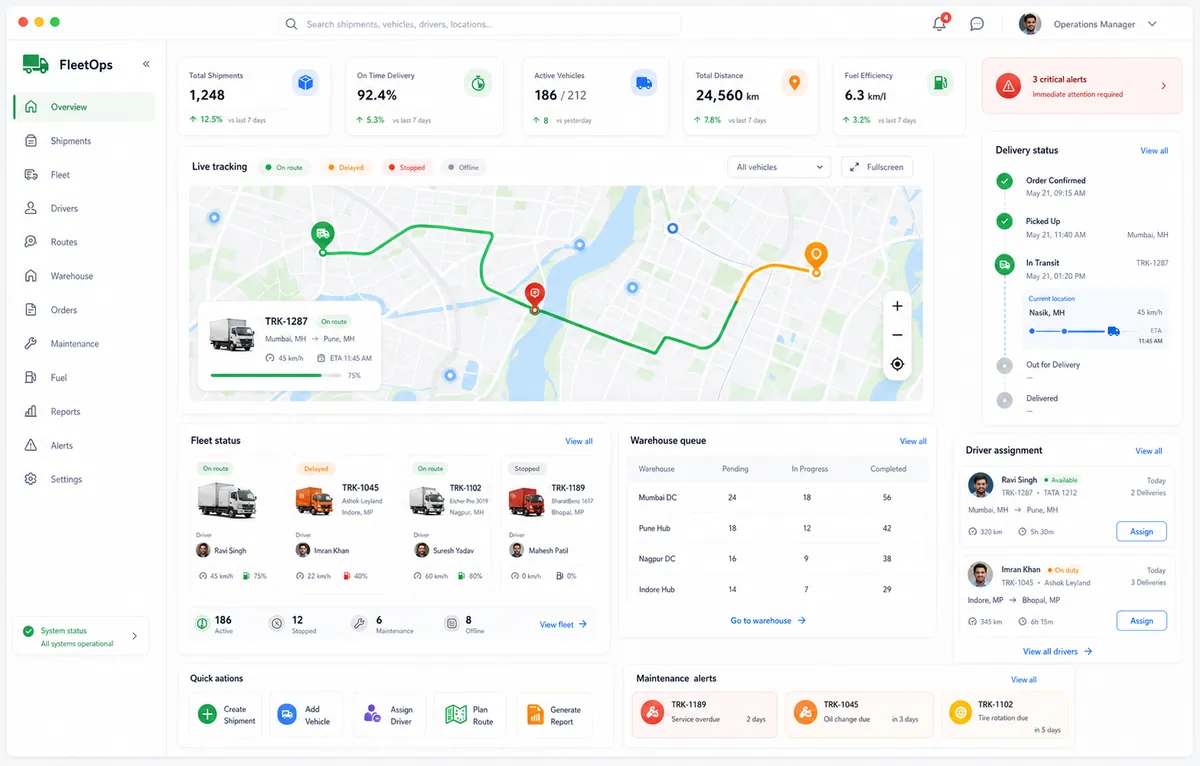
RoadBar
Logistics & Fleet Monitoring Dashboard
A fleet monitoring system for routes, drivers, warehouse queues, deliveries, and operational alerts.
24/7
Operations visibility
Fleet allocation decisions and delay detection became easier for operations management.
Ready to start?
If Internal Workflow Automation is part of your next project, the right first step is a clear technical discussion.
Share a short outline of the workflow, users, risks, or outcome you need. We will clarify the most realistic path forward.
Complementary services
To complete the solution, review these related service paths as well
Admin Panels & Operational Dashboards
A strong admin panel is more than tables and buttons. It should show operating status, delays, quality, team performance, and key indicators clearly so managers and operators can decide faster and act with confidence.
Custom Web Application Development
For teams whose work is scattered across spreadsheets, messaging apps, and disconnected tools, a custom web application creates one operational center where users, roles, statuses, reporting, and management decisions stay connected.
API & Web Service Design
When dashboards, mobile products, payments, messaging, and internal systems need to work together reliably, a secure and documented API becomes the stable backbone for integration and future growth.
Ready to start?
If Internal Workflow Automation is part of your next project, the right first step is a clear technical discussion.
Share a short outline of the workflow, users, risks, or outcome you need. We will clarify the most realistic path forward.
Frequently asked questions
When is Internal Workflow Automation the right choice?
Internal Workflow Automation becomes the right choice when the business process needs more than a generic tool and must stay clear, maintainable, and extensible over time.
Can this service be delivered in phases?
Yes. We usually define a first practical version, then expand in controlled phases so risk, cost, and quality stay manageable.
Can it connect to other systems later?
Yes. The implementation path is designed so later integrations, reporting layers, and future interfaces remain feasible.
What if the scope is not fully clear yet?
Then the first step is a lighter analysis phase to clarify requirements, priorities, constraints, and the best starting point.
How is Internal Workflow Automation different from spreadsheets and chat?
Spreadsheets and chat do not keep durable ownership, status and reporting. Internal Workflow Automation turns the real workflow into a maintainable software path.
What should we prepare before starting?
A short outline of users, the painful workflow, systems in use, and success measures for the first version.
Do you always recommend a custom build?
No. If an off-the-shelf tool is enough, we say so. Internal Workflow Automation is recommended when process, roles or reporting are specific.
How does this connect to the collaboration process?
Work follows written scope, reviewable increments and a maintainable handover—see the collaboration process page for the six steps.
Can the first version stay intentionally small?
Yes. A focused MVP on one painful flow is usually safer than building everything in version one.
What does delivery typically include?
Agreed scope for the first version, working software increments, documentation needed for handover, and a path for support or next phases.