Less rework
Written scope prevents late rebuilds.
Samenwerkingsproces
Veel projecten lopen vast door vage scope, verspreide beslissingen en te weinig zichtbare controlepunten.
Hamranik werkt met geschreven scope, duidelijke mijlpalen, reviewbare incrementen en een overdracht die onderhoud mogelijk maakt.
We starten bij operationeel probleem, gebruikers en succescriteria, en vertalen analyse, ontwerp, ontwikkeling en support naar zes stappen.
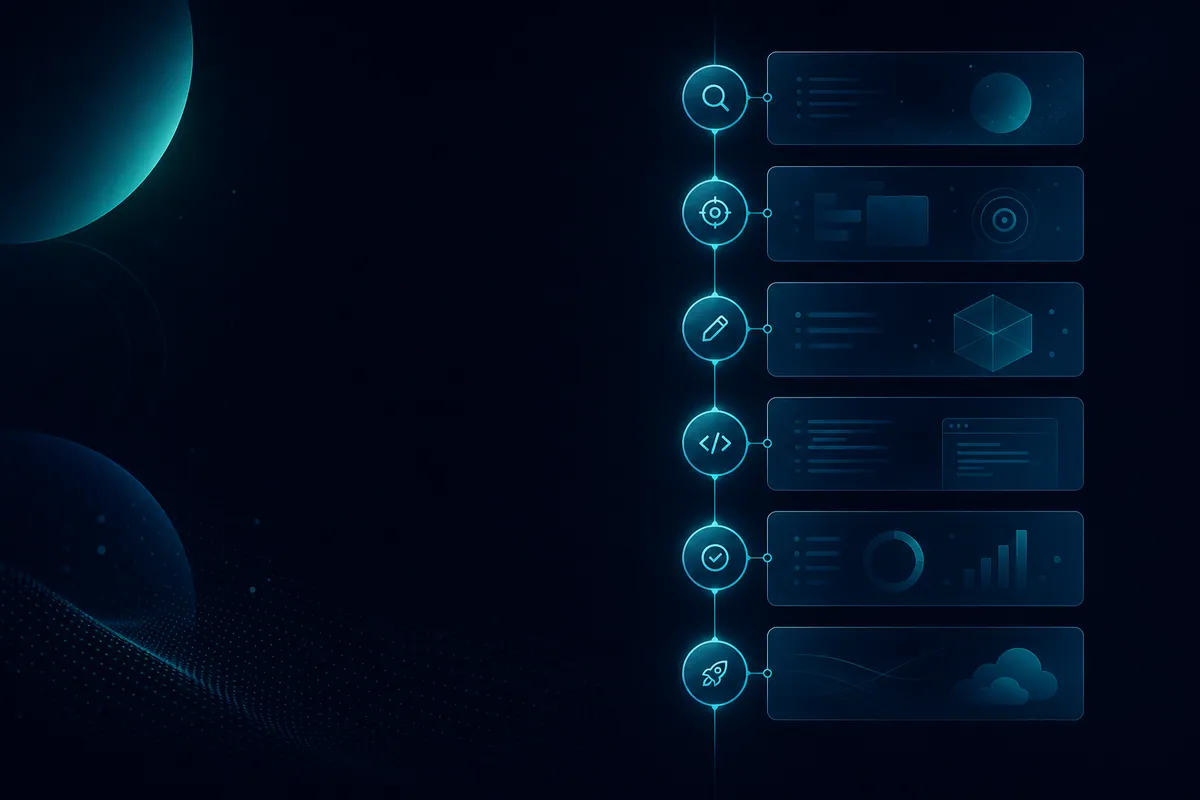
Zes stappen gekoppeld aan analyse, ontwerp, ontwikkeling en support
Why
Native localized concise section text.
Written scope prevents late rebuilds.
Each milestone is reviewable.
Delivery includes docs and support.
Overview
Analysis, design, development and support become six steps.
Stappen 1-2
Understand problem and success.
Stappen 2-3
Define scope and plan.
Stappen 4-5
Build and test increments.
Stap 6
Maintain and improve.
Steps
Each step has a goal, input, work, output and next gate.
Stap 1
Output: Probleembrief en besliscontextDoel: Clarify the business problem and decision.
Uw input
Short pain, users, limits and current systems.
Werk van Hamranik
We ask precise questions and record priorities.
Naar de volgende stap: When the goal is clear, analysis begins.
Stap 2
Output: Workflow rollen en succeskaartDoel: Map users, workflow, constraints and success.
Uw input
Current process, roles, data and indicators.
Werk van Hamranik
We map flow, risks and first version boundary.
Naar de volgende stap: After agreement, proposal is prepared.
Stap 3
Output: Scope mijlpalen en planningDoel: Make scope, assumptions and timeline explicit.
Uw input
Priorities, budget range and decision owner.
Werk van Hamranik
We document milestones, risks and schedule.
Naar de volgende stap: After approval, design and development start.
Stap 4
Output: Reviewbare incrementen en architectuurDoel: Build in reviewable maintainable increments.
Uw input
Feedback, change priorities and access to data.
Werk van Hamranik
We implement architecture, interface and logic.
Naar de volgende stap: When scenarios are ready, testing starts.
Stap 5
Output: Overdrachtspakket scenarios en documentatieDoel: Validate scenarios and hand over clearly.
Uw input
Acceptance input and access owners.
Werk van Hamranik
We test, fix and prepare handover.
Naar de volgende stap: After acceptance, support begins.
Stap 6
Output: Onderhoudsplan en verbeterbacklogDoel: Continue maintenance and improvement.
Uw input
Prioritised reports and user feedback.
Werk van Hamranik
We manage response, stability and improvement.
Naar de volgende stap: Collaboration continues in cycles.
Outcomes
Shared scope, visible progress and maintainable delivery.
Everyone knows version one boundaries.
Milestones create reviewable work.
Usage, access and support stay clear.
Checkpoints
Controls prevent uncertainty.
01
Problem and decision are confirmed.
02
MVP and success criteria accepted.
03
Milestones and responsibilities finalised.
04
Each part is approved or adjusted.
05
Scenarios pass and handover accepted.
Client role
Timely decisions keep delivery aligned.
One owner confirms scope and acceptance.
Processes and data examples are available.
Reviews get answers in time.
Changes include time and scope effect.
Useful preparation
What we avoid
We do not start without conditions.
No development before boundaries are clear.
Important changes show impact.
Nothing is done without accepted scenarios.
Version one solves core pain.
Resultaten
Van proces naar diensten, werkvoorbeelden en bronnen
Webapps, APIs, automatisering en advies.
Systemen voor echte workflows.
Van model naar traceerbare stromen.
Voorbeelden van opleveringen.
Ervaring, aanpak en standaarden.
Wat vooraf helder moet zijn.
Wanneer een proces klaar is.
Bespreek de volgende stap.
FAQ
Antwoorden over scope, timing, klantrol, support en projectfit.
Volgende stap
We bekijken probleem, prioriteiten en risico voordat de scope vaag wordt.